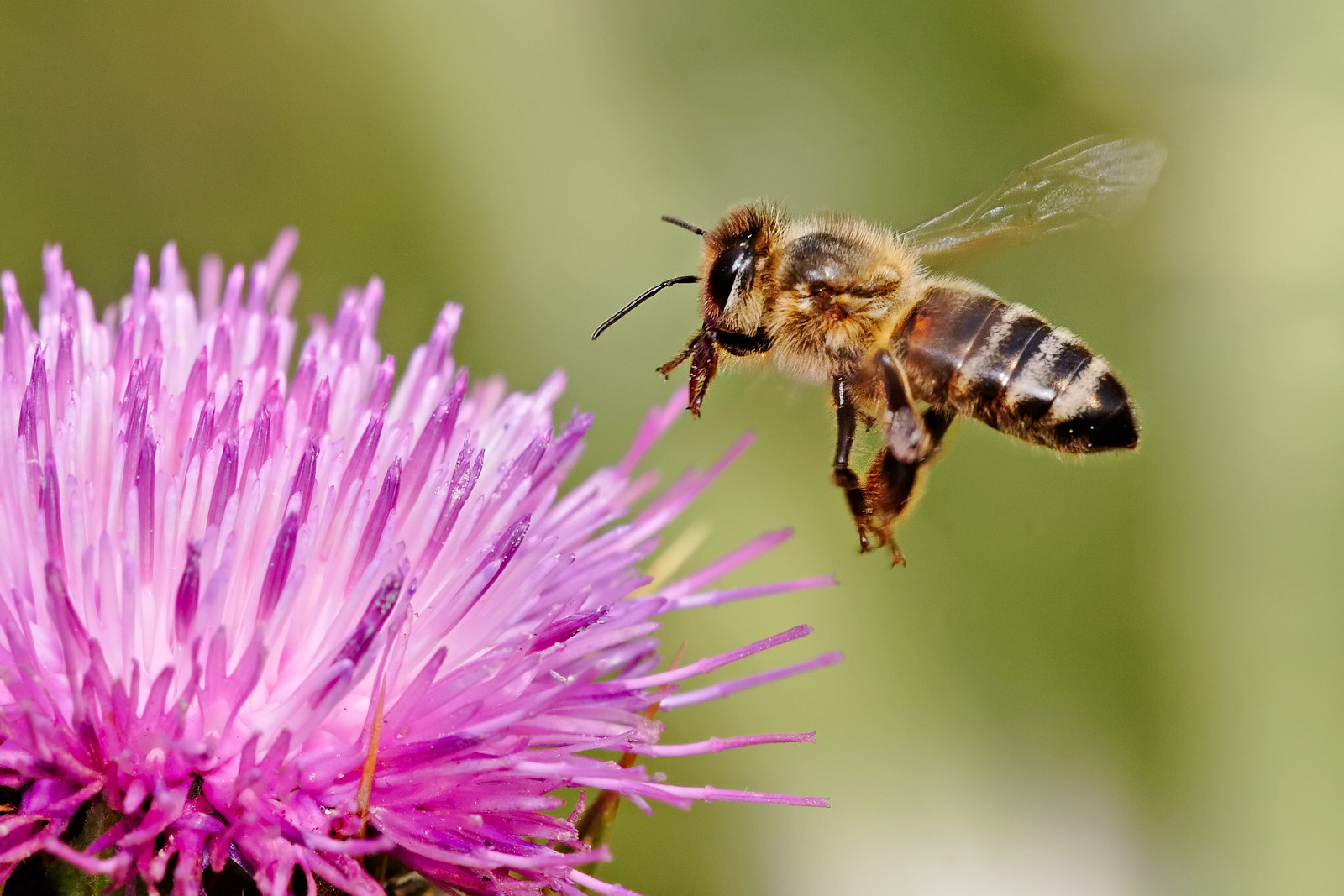
Varroa destructor is an external parasitic mite that reproduces inside sealed honeybee brood cells and feeds on the fat bodies of both developing pupae and adult bees. In Canada, it is the primary cause of colony loss when left unmanaged. The mite arrived in Canadian apiaries in the late 1980s and is now present in virtually every commercial and hobbyist operation in the country.
The treatments available to Canadian beekeepers are regulated under the federal Pest Control Products Act (PCPA). Products must be registered with Health Canada's Pest Management Regulatory Agency (PMRA) before they can be legally used. The registrations listed in this article were current as of April 2026; always verify current registration status with the PMRA before purchasing.
How varroa spreads and reproduces
A female varroa mite enters a brood cell just before capping, most commonly a worker cell 8 hours before sealing and a drone cell slightly earlier. Once the cell is capped, the mite lays eggs on the larva. The first egg laid is male; subsequent eggs are female. After the bee emerges, the mated daughter mites exit the cell and begin feeding on adult bees before re-entering another brood cell to reproduce.
The reproduction cycle inside sealed brood is why treatments that only kill phoretic (adult-bee-riding) mites are less effective during the brood-rearing season. Oxalic acid applied as a drip or spray, for example, has minimal penetration into sealed cells and must be timed to coincide with a broodless period to achieve high efficacy.
Monitoring: establishing a count before choosing a treatment
The alcohol wash (also called sugar roll, though alcohol is more reliable) is the standard method for counting phoretic mites on adult bees. A sample of approximately 300 bees (roughly half a cup) is taken from the brood nest and washed in 70% isopropyl alcohol. The mites release from the bees and are counted against the total bee sample to calculate mites per 100 bees.
The accepted treatment threshold in Canada:
- Spring and summer (brood-rearing season): 2 mites per 100 bees
- Late summer (August–September, pre-winter-bee-rearing): 1–2 mites per 100 bees — a lower effective threshold because damage to winter bees at this stage has outsize consequences for winter survival
- Winter (broodless cluster): Any detectable mite load is significant; oxalic acid treatment during broodless periods has near-100% efficacy on phoretic mites
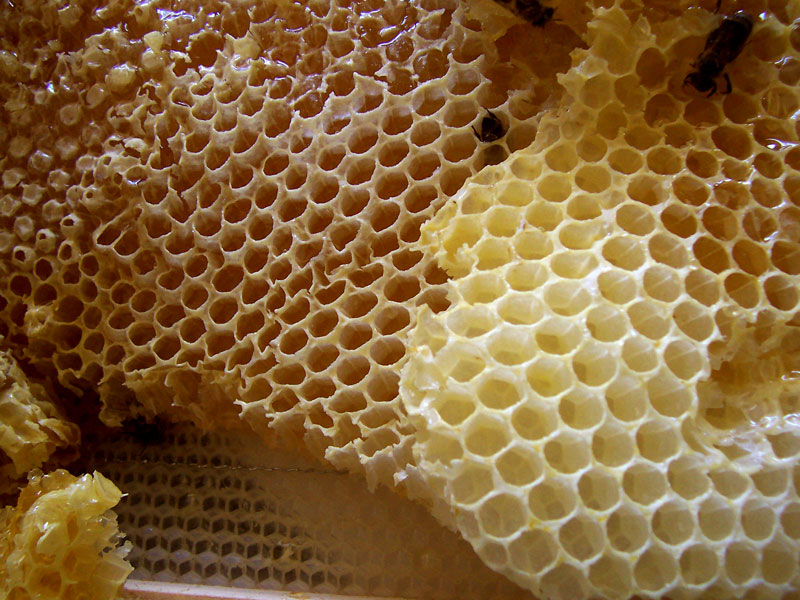
Sealed brood cells are where varroa reproduction occurs. Image: Wikimedia Commons, CC BY-SA.
Oxalic acid (OA)
Oxalic acid is a naturally occurring organic compound found in many plants, including rhubarb. In Canada, it is registered under the trade name Api-Bioxal (PMRA Reg. No. 31511) and is available in two application forms: extended-release strips (Apivar OA is not the same product — confirm registration at time of purchase) and solution for vaporization or drip.
Efficacy and timing
Oxalic acid is highly effective against phoretic mites — mites riding on adult bees — but has minimal efficacy against mites in sealed brood cells. This creates a clear application window: during the natural broodless period in winter, when all mites are phoretic.
For mid-season application in colonies with brood, repeated treatments are needed at 5-7 day intervals to catch mites as they emerge from cells. This schedule is demanding and most effective when coordinated with a controlled broodless period (achieved by caging the queen).
Temperature constraints
Vaporization of oxalic acid requires temperatures above 0°C to function safely and effectively. Drip application requires temperatures sufficient that bees are not clustered — generally above 5°C. Winter treatment by vaporization can be done at temperatures down to approximately -5°C with appropriate equipment, but below this the bees do not distribute the vapor effectively within the cluster.
Residue and honey
Oxalic acid occurs naturally in honey at low concentrations. Properly applied according to label directions, Api-Bioxal does not raise honey OA levels above naturally occurring background concentrations. Do not apply when honey supers intended for harvest are in place.
Formic acid
Formic acid is the active ingredient in Mite-Away Quick Strips (MAQS) and Formic Pro, both registered in Canada. Unlike oxalic acid, formic acid vapor penetrates sealed brood cells, making it effective during the brood-rearing season without requiring a broodless period. This is its primary advantage for summer use.
Efficacy and application
Mite-Away Quick Strips are placed directly on the top bars of the brood box. The formic acid evaporates over approximately 7 days (MAQS) or is released more slowly over 14 days (Formic Pro, allowing for continued honey production during treatment). Efficacy against phoretic mites is typically 90–95%; efficacy against mites in sealed brood is lower (60–80%) but meaningfully better than oxalic acid in brood.
Temperature constraints — critical for Canadian use
Formic acid treatment has a narrow temperature window. MAQS: minimum 10°C, maximum 29.5°C. Formic Pro: minimum 10°C, maximum 33°C. Temperatures above the maximum cause excessive formic acid evaporation, which can kill the queen and damage brood. This is a significant operational constraint in July and August across southern Canada, particularly in BC's interior, the Okanagan, the southern Prairies, and southern Ontario.
In 2023, multiple BC Interior beekeepers reported queen losses during formic acid treatment applied in late July when afternoon temperatures reached 33–36°C. Monitoring overnight minimums and daytime maximums before and during treatment is not optional — it is required by the label.
Thymol
Thymol is a naturally occurring essential oil component derived from thyme. In Canada, ApiLife Var (a thymol-based wafer) and Apiguard (thymol in a slow-release gel) are registered for varroa treatment.
Efficacy
Thymol is moderately effective — typically 70–90% efficacy under optimal conditions — and works through vapor penetration. It has some effect against mites in sealed brood, making it a mid-season option, though less reliable than formic acid for brood-cell penetration.
Temperature constraints
Thymol requires sustained temperatures above 15°C for adequate evaporation. Below 15°C, thymol does not vaporize efficiently and treatment efficacy drops substantially. This makes it unsuitable for fall treatment in most Canadian provinces once September temperatures decline, and it is not used for winter treatment.
Above 30°C, over-evaporation can cause bee mortality and brood damage, though this threshold is generally less severe than with formic acid.
Honey production restriction
Thymol cannot be applied when honey supers intended for human consumption are in place. Thymol absorbs into wax and honey and can produce off-flavors that persist.
Synthetic acaricides: amitraz (Apivar)
Apivar strips contain amitraz, a synthetic acaricide. Unlike organic acid treatments, amitraz is not temperature-sensitive in the same way and can be applied across a wider seasonal window. Efficacy when used correctly is high — typically 95%+.
The primary concern with Apivar is resistance. Varroa populations with reduced amitraz sensitivity have been confirmed in multiple Canadian provinces. Rotating between treatment classes (organic acids and amitraz) and confirming treatment efficacy with mite counts post-treatment is important for resistance management.
Apivar strips must remain in the hive for the full 42-56 day treatment period. Removing strips early — a common mistake — reduces efficacy and accelerates resistance development.
Treatment selection: a summary comparison
- Winter, broodless: Oxalic acid (vaporization or drip). Most effective use of any varroa treatment — near-complete control with a single treatment.
- Spring buildup (below threshold): Monitor and hold; treat if threshold is reached before supers go on.
- Summer, below 29°C, supers off: Formic acid (MAQS or Formic Pro) — only treatment with efficacy in sealed brood, critical for protecting the winter-bee generation.
- Summer, temperatures variable: Apivar — synthetic but reliable when organic acid temperature windows cannot be met.
- Fall, September, above 15°C: Thymol or formic acid; temperature monitoring required.
- Fall, below 15°C: Oxalic acid vaporization.