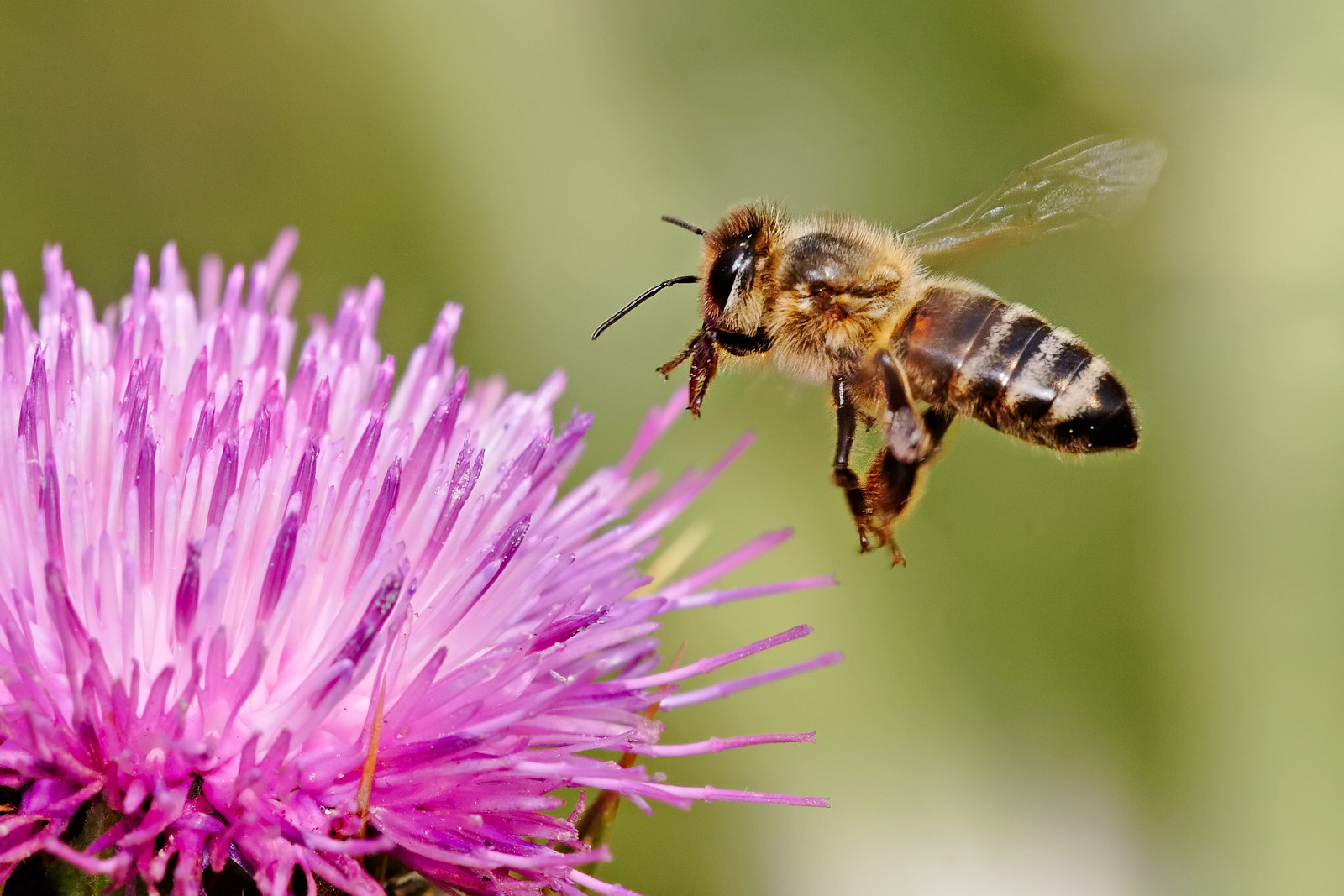
Colony management in Canada is shaped more by calendar than by any other single factor. A hive that would be considered healthy in Georgia in February may be dangerously depleted if found in the same state in Saskatchewan in the same month. The inspection practices described here are organized around the Canadian temperate calendar — spring buildup, summer production, late-summer varroa treatment window, and winter preparation — rather than a generic global framework.
Spring inspection: what you are looking for and when to open the hive
The first spring inspection should happen when daytime temperatures have held above 12°C for at least three consecutive days and the forecast shows no significant rain for 48 hours. In coastal BC and southern Ontario, this is typically late March to mid-April. In Alberta and Saskatchewan, the same conditions may not arrive until late April or early May. Opening a hive in temperatures below 10°C when brood is present causes chilling that can kill an entire brood frame within hours.
The spring inspection checklist:
- Cluster size — a cluster smaller than three frames of bees after winter suggests the colony may not recover without intervention (combining or brood boosting from a stronger colony).
- Food stores — minimum four frames of capped honey in a ten-frame Langstroth configuration. Starvation in April is more common in Canada than most new beekeepers expect, because the nectar flow does not begin until dandelions open.
- Queen presence — look for eggs (fresh eggs stand upright at the base of the cell) and young larvae. You do not need to find the queen herself to confirm she is present and laying.
- Brood pattern — solid capped brood in an oval pattern indicates a healthy queen. Scattered pattern with many empty cells ("shotgun brood") may indicate disease or a failing queen.
- Signs of American foulbrood — sunken, discolored, perforated cappings and a ropiness when a matchstick is inserted and withdrawn from a suspect cell. If AFB is confirmed, Canadian federal regulations require reporting to your provincial apiarist.
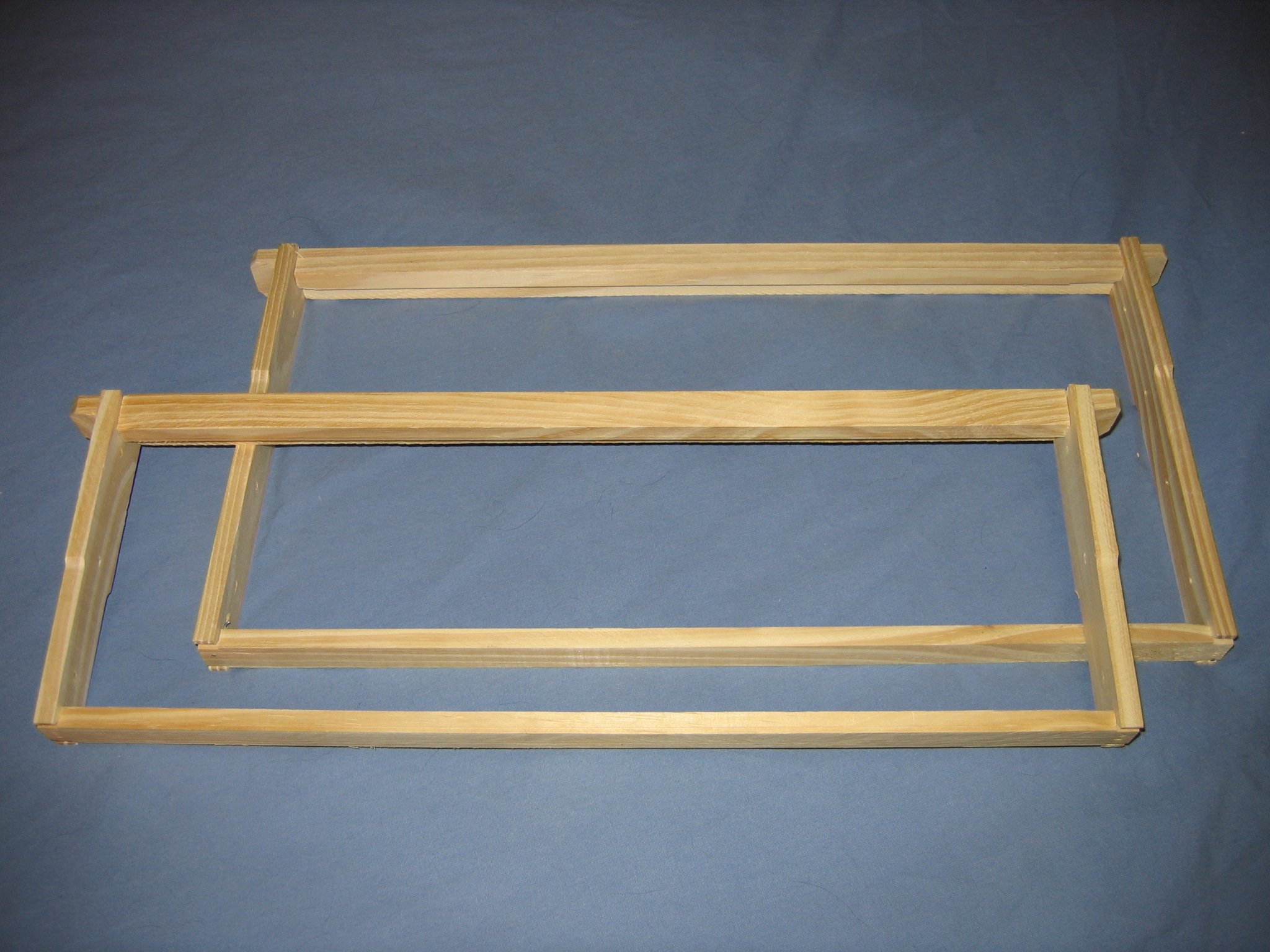
A Langstroth frame showing the typical distribution of capped honey (upper corners) and open brood. Image: Wikimedia Commons, CC BY-SA.
Reading brood patterns: what each pattern indicates
Brood pattern assessment is one of the most information-dense observations a beekeeper makes during an inspection. A solid, compact oval of capped worker brood surrounded by a ring of pollen and then honey — sometimes called the "brood nest" or "beekeeper's rainbow" — indicates a queen producing viable eggs at a consistent rate with workers capping cells promptly.
Patterns that indicate problems
Scattered capping with many empty cells: Most commonly indicates high varroa infestation, European foulbrood, or a failing or drone-laying queen. Distinguish between these by checking whether uncapped larvae look healthy (white, glistening, C-shaped) or discolored (yellowed, twisted — signs of EFB).
All drone brood in worker cells: Indicates a drone-laying queen (queen has run out of sperm) or laying workers (no queen present for more than 4-6 weeks). The cells will be domed — worker brood cells are flat-capped; drone cells bulge outward. A colony in this state cannot recover without a new mated queen.
Multiple eggs per cell: Classic sign of laying workers. Multiple unfertilized eggs placed randomly in cells indicate the pheromone suppression that the queen normally exerts over workers has collapsed.
Summer inspections: frequency and what to monitor
During the main nectar flow (typically June through early August in most Canadian provinces), inspections every 7 to 10 days are sufficient. The primary concern in this period is swarm prevention. A colony that fills its brood box and has nectar coming in faster than it can process will begin preparing to swarm — the bees' natural reproduction mechanism.
Swarm prevention indicators to check at each summer inspection:
- Queen cells — distinguish between swarm cells (built at the bottom of frames, initiated when the colony decides to swarm) and supersedure cells (built mid-frame, initiated when workers detect a failing queen).
- Backfilling — when foragers fill brood cells with nectar because there is insufficient space elsewhere, the queen has no room to lay and swarming becomes imminent. Adding a super is the immediate response.
- Bee population — a colony that covers every frame in the brood box and is clustering outside the entrance ("bearding") in warm weather needs space, not necessarily ventilation.
Late-summer inspection and varroa treatment window
The period from late July through August is the most consequential for colony health heading into winter. This is when the bees that will survive winter — the "winter bees," which differ physiologically from summer bees and have extended fat bodies — are being raised. If varroa mite levels are high during this period, the winter bees emerging are often compromised by deformed wing virus and fail to form a viable overwintering cluster.
Conduct a mite wash or alcohol wash to establish the actual mite count (expressed as mites per 100 bees). The generally accepted threshold for treatment in summer is 2 mites per 100 bees. At or above this level, treatment should begin immediately — not at the end of the season.
A mite count taken in late August that comes back at 5 per 100 represents a colony already in serious decline. The winter bees being raised from late July onward have already been exposed to high mite loads during their development. Treatment in September does not recover those bees.
See the Varroa Mite Treatment article for specific product options registered for use in Canada and their temperature constraints.
Fall preparation: the final inspection checklist
The fall inspection, typically conducted in September in most provinces (earlier in Alberta, Manitoba, and Saskatchewan), determines whether a colony is ready for winter. The items to assess:
- Food stores: A ten-frame Langstroth colony in Canada needs a minimum of 18 to 25 kg of honey to survive winter, depending on winter length. Weigh the hive if possible, or estimate by counting full frames of capped honey (approximately 2.5 kg per full frame).
- Population: A colony heading into winter needs to cover at least six to eight frames. A smaller cluster risks breaking contact with food stores during cold snaps.
- Queen: Confirm the queen is present and has been laying through September. A colony that lost its queen in August may appear populous but will fail in March with no new bees being produced.
- Disease and pests: Check for wax moths in weaker colonies and treat varroa if you have not already done so this season.
Winter wrapping and ventilation
In provinces with consistent below-freezing winters — Alberta, Manitoba, Saskatchewan, and most of Ontario and Quebec — exterior wrapping with roofing felt or purpose-made hive wrap reduces heat loss and prevents condensation-driven moisture buildup inside the hive. The upper entrance must remain open for ventilation; a colony that cannot exhale moisture dies from dampness before it dies from cold.
Mouse guards should be installed before the colony clusters — a cluster of bees is too cold and slow in November to defend the entrance from mice seeking winter shelter.