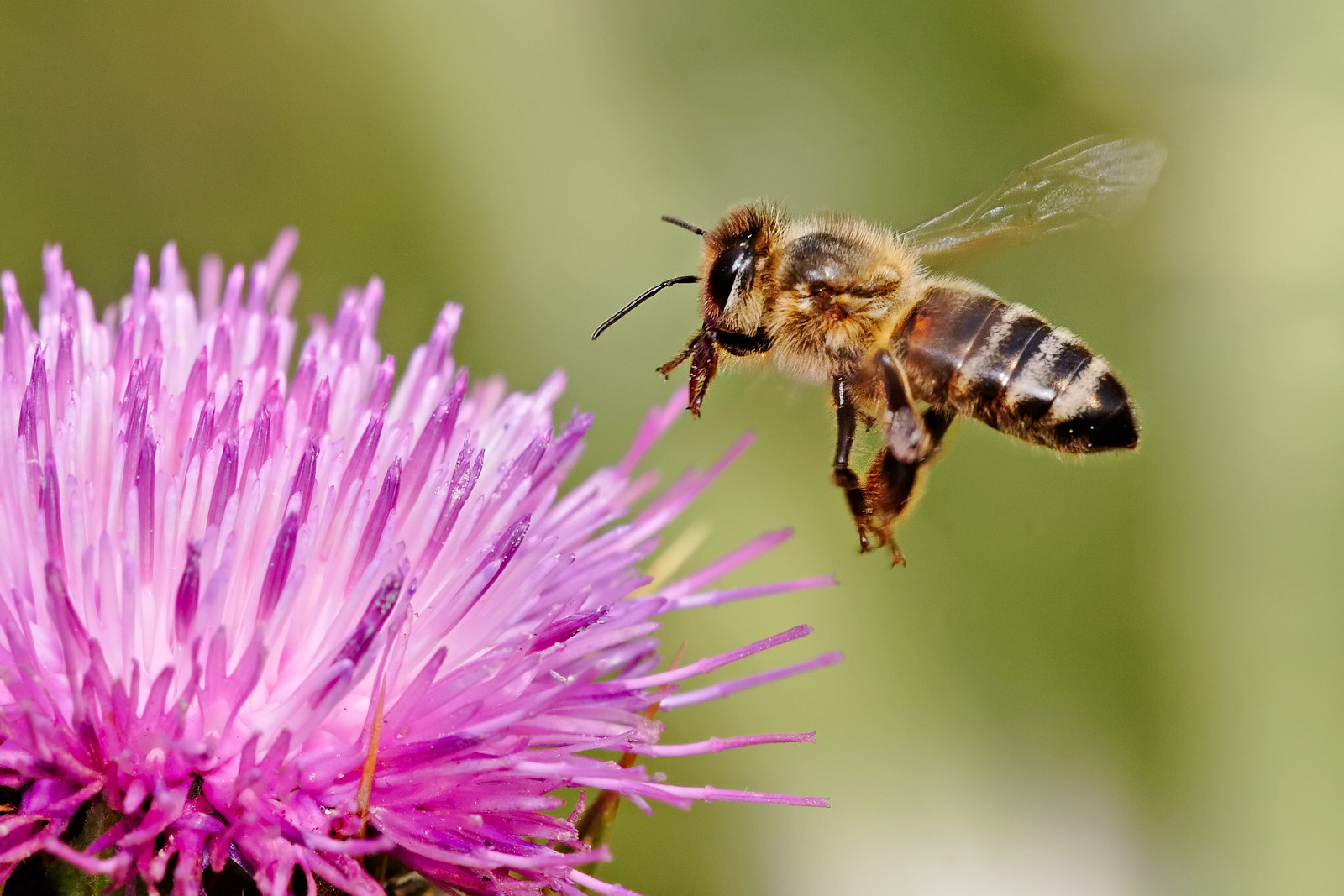
Urban beekeeping in Canada is regulated at the municipal level. There is no single federal or provincial statute that governs whether and how residents may keep bees in a city — each municipality has adopted its own approach, ranging from explicit permission with detailed conditions to near-total prohibition. The bylaw summaries below are drawn from publicly available municipal codes and, where applicable, from direct correspondence with bylaw offices. All information reflects the status as of April 2026.
Before establishing any urban apiary, verify directly with your municipality's bylaw or licensing office. Bylaws are amended regularly, and the consequences of non-compliance — hive seizure, fines, mandatory removal — are worth avoiding with a 15-minute call to the relevant office.
Vancouver, British Columbia
Vancouver has permitted urban beekeeping under its Animal Control Bylaw since 2005, making it one of the earlier Canadian cities to formally allow it. The current conditions under Bylaw No. 9150:
- Maximum hives: 4 per lot in residential areas; up to 6 on larger residential lots with additional setback compliance.
- Setback from property lines: Hives must be at least 3 metres from any property line. If a solid fence or hedge at least 1.8 metres high is installed between the hive and the adjacent property, no additional setback is required on that side.
- Hive placement: Hives must not be within 3 metres of a public sidewalk or road.
- Permit requirement: No permit is required, but hives must be registered with the BC Ministry of Agriculture under the provincial Bee Act.
- Neighbour consent: Not required by bylaw, though the City encourages it. Practical experience suggests that notifying immediate neighbours before establishing hives substantially reduces complaint-driven bylaw investigations.
Provincial registration under the BC Bee Act is handled through the provincial apiarist's office. Registration is free and links the beekeeper to the provincial disease monitoring network. BC experienced an American Foulbrood outbreak in several Lower Mainland apiaries in 2022; provincial registration allows the Ministry to notify registered beekeepers of confirmed cases in their vicinity.
Toronto, Ontario
Toronto's Bylaw 349, Chapter 349 of the City of Toronto Municipal Code, formally permits urban beekeeping. Key provisions:
- Maximum hives: No specific cap on hive number in the bylaw text, but the code requires that the number of hives not create a nuisance. In practice, bylaw officers have used complaints and site assessments to determine reasonable numbers; most urban Toronto beekeepers maintain 2 to 4 hives without issue.
- Setback from property lines: Minimum 30 metres from any property line in standard residential zones — a requirement that is effectively impossible to meet on most Toronto lots. The bylaw provides an exception: if a 1.8-metre barrier (solid fence, hedge, or building wall) is placed on the flight-path side of the hive, the 30-metre setback is replaced by a 1.5-metre setback from the barrier itself.
- Rooftop hives: Permitted; the setback provisions are calculated from the edge of the roof structure rather than the property line, making rooftop placement practical on most commercial and residential buildings.
- Permit requirement: No municipal permit is required. Ontario does not have mandatory provincial registration for hobbyist beekeepers (unlike BC), though voluntary registration with the Ontario Beekeepers' Association is encouraged.
- Queen type: The bylaw recommends (but does not legally require) gentle-bred Italian or Carniolan queens rather than aggressive hybrid or Africanized stock. In practice, this is enforced through complaint response rather than proactively.
Calgary, Alberta
Calgary amended its Land Use Bylaw (1P2007) to explicitly permit urban beekeeping. Prior to 2013, urban hives existed in a regulatory grey area; a formal amendment clarified the rules:
- Maximum hives: 2 hives per residential property in low-density residential (R-1 through R-2) zones; up to 4 hives on properties with a total area of 557 m² or greater.
- Setback: Minimum 1 metre from all property lines. A 1.8-metre flyway barrier (solid fence) on the street or lane side of the hive is required if the hive faces a property line within 10 metres.
- Permit requirement: A development permit is required before establishing hives. The permit application asks for a site plan showing hive placement, setbacks, and barrier locations. As of early 2026, the permit fee is approximately $170 CAD. Processing time is typically 4 to 8 weeks.
- Neighbour consent: Not a bylaw requirement, but the permit application package provided by the City includes a neighbour notification template and notes that applicants who have spoken with adjacent property owners tend to experience fewer delays during the review process.
- Alberta Agriculture registration: Required under the provincial Bee Act of Alberta. All beehives must be registered; registration is free. The Alberta apiarist network conducts annual hive checks and disease surveillance across the province.
Montreal, Quebec
Urban beekeeping in Montreal is governed at the borough level rather than the city level. Each of Montreal's 19 boroughs has adopted its own rules, which creates significant variation within the city. The general framework from the ville de Montréal's urban agriculture guidelines:
- Maximum hives: Varies by borough. Le Plateau-Mont-Royal, Rosemont–La Petite-Patrie, and Villeray–Saint-Michel–Parc-Extension generally permit 2 to 4 hives per residential property. Outremont and Westmount (municipalities within the urban agglomeration) have their own rules and permit fewer hives.
- Setback: Generally 2 to 3 metres from property lines in boroughs that have published specific rules. Some boroughs require a 1.8-metre barrier facing public right-of-way or adjacent residential properties.
- Permit requirement: Varies by borough. In Rosemont–La Petite-Patrie, no permit is required but hives must be declared to the borough's urban agriculture office. In Ville-Émard–Côte-Saint-Paul (now Sud-Ouest), a permit is required.
- Language of bylaw documents: All Montreal bylaw documentation is in French. English translations are not officially provided; contact the relevant borough office directly for clarification.
- Quebec provincial registration: Required under the Loi sur les abeilles (Bee Act of Quebec). Registration is handled through the MAPAQ (Ministère de l'Agriculture, des Pêcheries et de l'Alimentation du Québec). Non-compliance carries fines.
Edmonton, Alberta
Edmonton follows a similar framework to Calgary under Alberta's provincial Bee Act, with municipal amendments:
- Maximum hives: 4 hives per residential property; 2 hives on properties smaller than 400 m².
- Setback: 1 metre from all property lines. Flyway barriers of 1.8 metres are required when the hive faces a property line within 8 metres.
- Permit requirement: Unlike Calgary, Edmonton does not require a development permit for beehives below the maximum allowed count on residential properties. A permit is required if the hive count exceeds the residential maximum or if the property is in a commercial or industrial zone.
- Alberta provincial registration: Required, same as Calgary. Contact the Alberta Queen Bee registrar through Alberta Agriculture.
Municipalities that prohibit urban beekeeping
Not all Canadian municipalities permit urban beekeeping. Some notable restrictions as of early 2026:
- Mississauga, Ontario: No specific urban beekeeping bylaw; hives in residential zones have been subject to nuisance complaints that the city has addressed by ordering removal. Beekeeping is not explicitly prohibited, but the absence of a permitting framework makes it legally uncertain.
- Laval, Quebec: The city's zoning code has historically restricted livestock in residential zones, and beehives have been classified as livestock in bylaw enforcement proceedings. Check with Laval's bylaw office before establishing hives.
- Surrey, BC: Urban beekeeping is permitted in RS, RE, and RH residential zones but prohibited in RT (townhouse) and RM (multi-family) zones.
General registration requirements under provincial Bee Acts
Every Canadian province with meaningful apiculture activity requires hive registration through its provincial apiarist office. Registration exists primarily for disease surveillance — if American Foulbrood or other notifiable diseases are confirmed in an area, the provincial apiarist uses registration records to notify beekeepers in the surrounding radius. Operating unregistered hives in provinces that require registration is an offence under provincial legislation.
Registration contacts by province:
- British Columbia: BC Ministry of Agriculture, Apiculture Program — gov.bc.ca
- Alberta: Alberta Agriculture and Irrigation, Apiculture — alberta.ca
- Ontario: OMAFRA Apiary Program — ontario.ca
- Quebec: MAPAQ — mapaq.gouv.qc.ca
- Nova Scotia: NS Department of Agriculture — novascotia.ca/agri

